Permaculture and Natural Farming: Theory and Practice
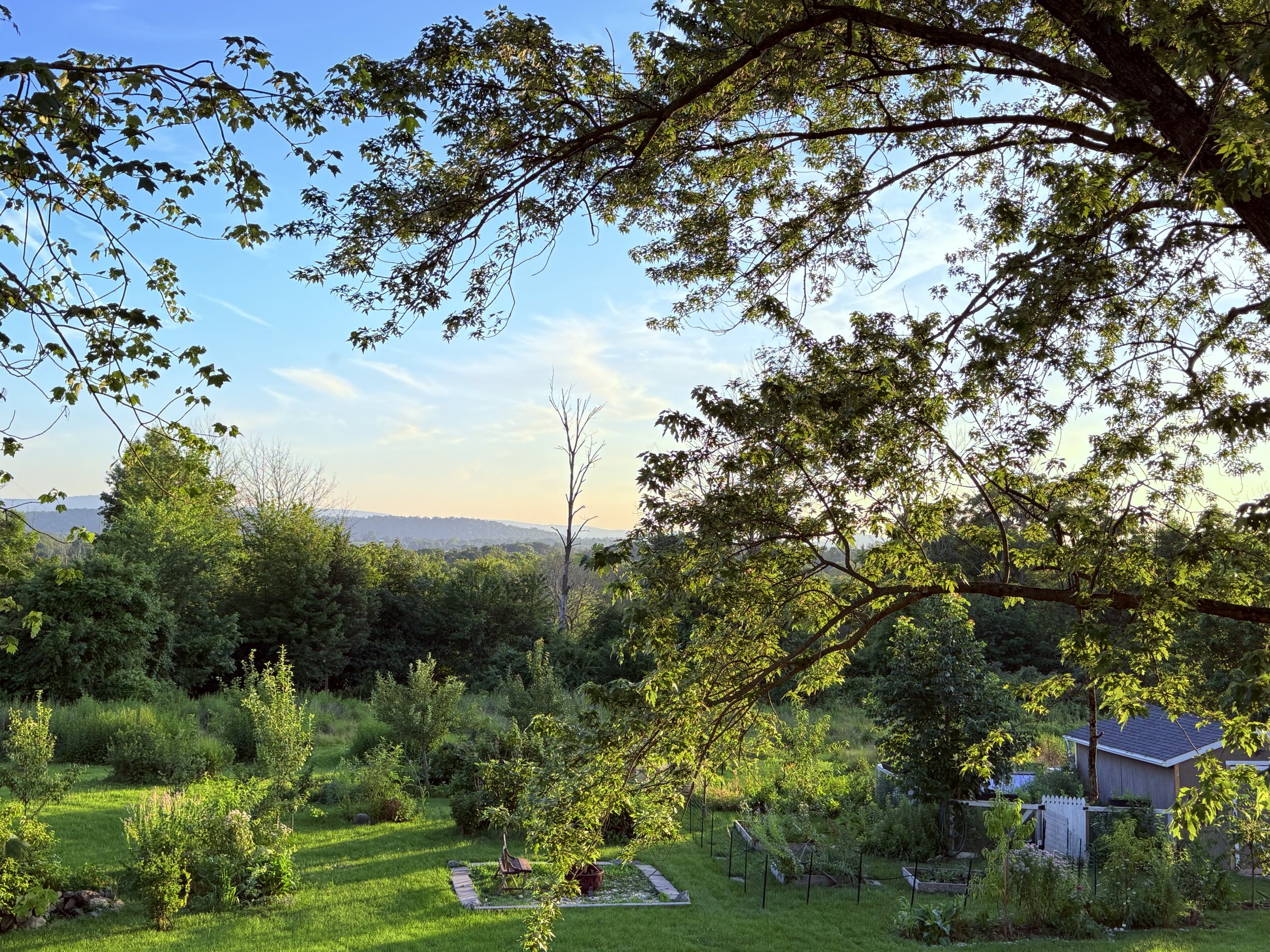
© 2026 Ancient Origins Permaculture
"Yet, man is a strange creature. He creates one troublesome condition after another and wears himself down observing each... take all these artificial conditions away and he suddenly becomes very uneasy. Even though he may agree that the natural way of farming is legitimate, he seems to think that it takes extraordinary resolve to exercise the principle of doing nothing."
~ Masanobu Fukuoka
Where are we going with all this energy-intensive systemized agriculture? In nature, plants live and thrive together, but we see coexistence as competition. Modern agriculture believes that to raise one crop we must remove all others. Yet, crops do grow together if we'd only look to nature. This world did not survive through our own efforts. We are measurably the ones destroying it.
Weeds do not pose a problem. Nothing is more natural than grass growing at the foot of a tree; no one would think of the grass as interfering... or would they?
In nature, bushes and shrubs grow at the foot of large trees, grasses spread among them, and mosses flourish beneath. Instead of competing for nutrients, this is a peaceful world of coexistence. Rather than seeing one as stunting the other, we should marvel at the ability of these plants to thrive together while providing abundance and habitat.
We think of nature as brutal, forgetting her "grace" and cohesion. She knows how to build carbon chains without us.
Cultivation without tilling, without plastics, and fertilizers is not just possible, it's more beneficial to the consumer, the farmer, and the planet. It only requires bringing life back to the soil.
It is imperative for farmers/gardeners of every scale to SLOW DOWN with all the implementation of new-fangled gimmicks, instead just consider how nature works. Surely, we can provide growing environments that mirror a closer resemblance. Diverse polyculture guilds, cover crops in rotation, and regenerative grazing is a start.
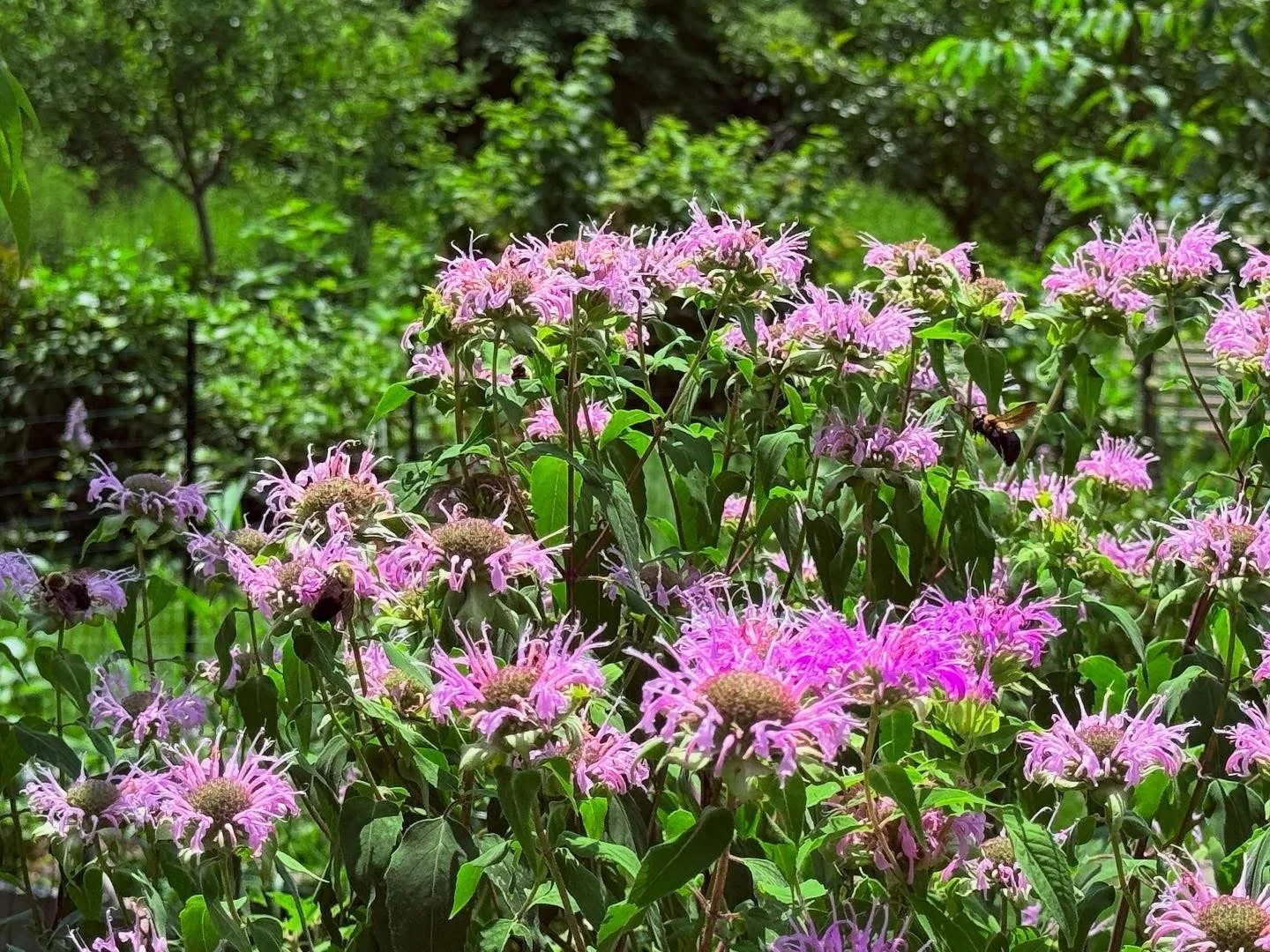
To farm and garden with nature, we must return to the best practices of the past. Those practices can be updated with modern science, but mother nature already knows what she's doing.
Plants do not need to be raised; they are designed to grow on their own. The forest is living proof that trees are not raised with fertilizer but grow by their own innate methods we have hardly begun to understand.
Rather than observe and utilize this great power, we weed and plow the fields, depleting the soil of fertility. We rob the microbes and small creatures who do the real work of their habitat, creating a deficiency of trace components that make up the soil as well as our own vitality.
We need biologically active living soil with adequate aeration and energy underground to sustain an abundance of organisms that are in continuous contact with nitrogen, oxygen, and carbon from the atmosphere. Plant roots are the main agents for lifting mineral nutrients to surface soil layers and enabling plants to take a proportion of them above ground.
A healthy and diverse root system makes for nutrient dense food. Yet, in our quest to prove that man always has the answer, our practices turn rich, living, organic matter into a dead, plastic particle filled, mineral conglomerate that only functions to support synthetic crops of increasing expense and lower nutritional value.
Why do we refuse to work together, failing to look and listen for the measures mother earth already provides?
A permaculture or natural farm is at once a forest, an orchard, and a vegetable garden. Call it Agroforestry, a Food Forest, a Forest Garden, whatever name you like. We cannot just take from the earth and one another. Our systems should be rooted in reciprocity, diversity, and compassion for future generations.
Permaculture offers a return to real farming for real people in real villages who want real food.
Modern man will use every resource imaginable in his quest for energy and ease of labor, but to what end? We will have a hard time keeping the kind of uplifting attitude required when we think we have advanced so far as to sit around starring at screens. Man does not realize the self has destructed entirely to the point he accepts that he can and will do nothing. We cannot outrun the natural order. It is the only future.
When will AI pull our weeds? I'm sure it's already being worked on, but what is a weed anyway?
The cycles of coexistence, competition, and mutual benefit repeat themselves. Certain weeds grow as individuals, others in bunches, and others form colonies. Some are sparse, some grow densely, and some in clumps. Some will rise up over their neighbors and overpower them, some wrap themselves around others in symbiosis, some weaken other plants, and some die while others thrive as undergrowth.
"The concept of a weed is completely unecological. It has no meaning or validity."
~ David Holmgren
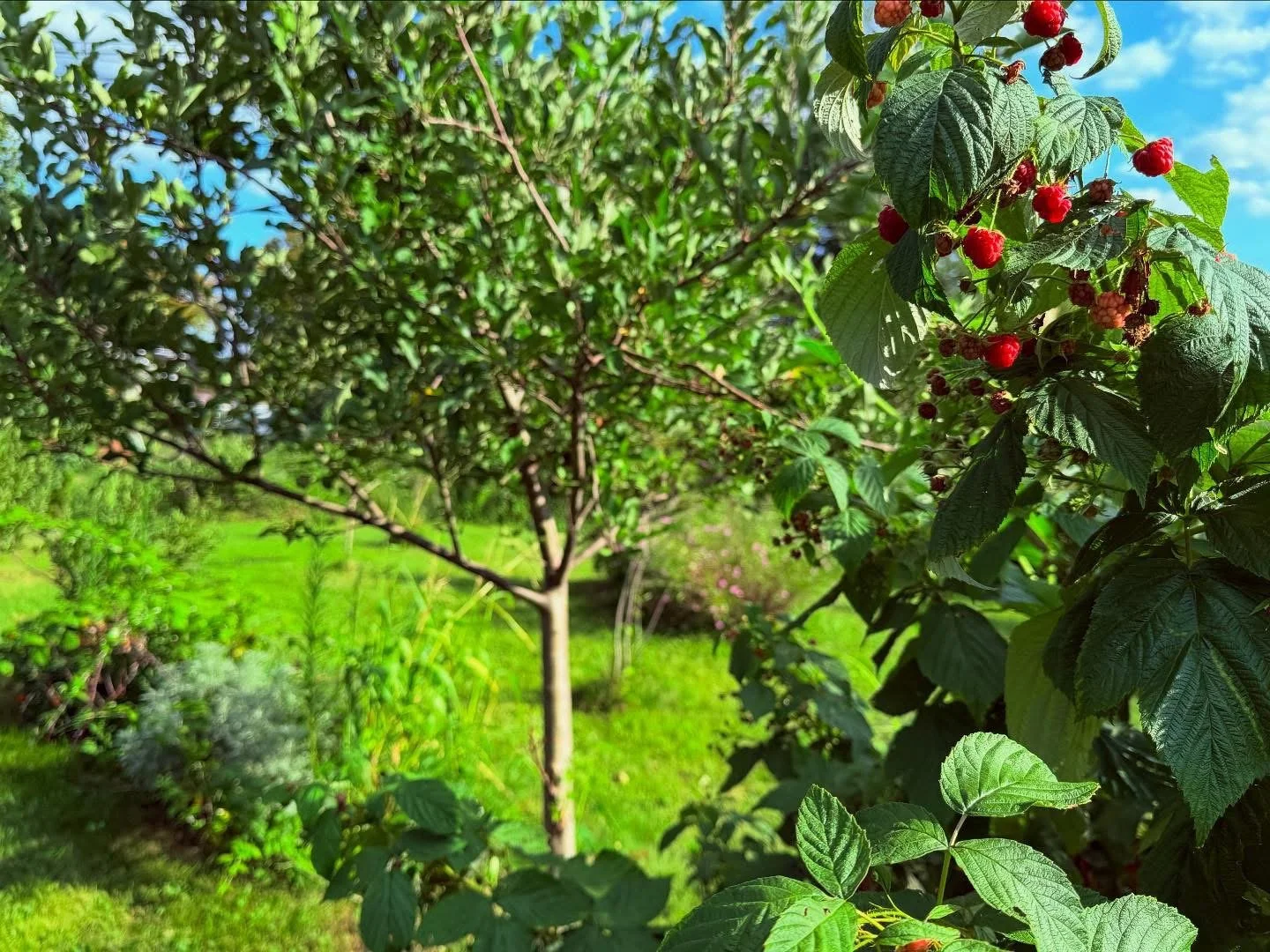
The Permaculture Lens
Weeding entire fields is an extreme act. Instead, permaculture uses small and slow solutions. Our systems are designed with ecology in mind. So, we do things like choose native plants whenever possible because it makes sense when considering we are seeking harmony as a feature. Sometimes, we use this as Integrated Pest Management.
Permaculture utilizes information and conscious design to see a bigger picture. A system is set up through ecological intelligence. This is far different than modern agriculture. This is how we bypass the financially costly as well as energy and labor-intensive work of constant weeding or spraying for pests.
"Permaculture is a philosophy of working with, rather than against nature; of looking at systems in all their functions rather than only asking one yield of them, and of allowing systems to demonstrate their own evolutions"
~Bill Mollison
By understanding and making use of the properties of weeds, one weed can be used to drive out a large number of other weeds. If the farmer were to grow grasses or green manure crops that take the place of undesirable weeds and are beneficial to their crops, then they would no longer have to weed. Instead, green manure would enrich the soil, such as c4 grasses sequestering carbon and preventing erosion.
In this way, growing fruit trees and tending an orchard can be made easier and more advantageous than normal methods. There is no question that weeding in orchards is not only useless, it is actually harmful.
It is similar with the use of pesticides. The moment the problem of crop disease or insect damage arises, talk turns immediately to methods of control. A thousand plant diseases exist in nature, yet in truth there are none. It is the agricultural specialist who gets carried away with discussions on disease and pest damage. Haven't we learned what our methods of control lead to? Only chaos... Food without nutrition, soil without life, a lack of diversity, dust bowels, and new deserts.
"Sitting at our back doorsteps, all we need to live a good life lies about us. Sun, wind, people, buildings, stones, sea, birds, and plants surround us. Cooperation with all these things brings harmony, opposition to them brings disaster and chaos."
~ Bill Mollison
Although research is done on ways to reduce the number of rural country towns without doctors, no studies are ever run to find out how these places have managed to get by without them. In the same way, when people spot signs of a plant disease or an insect pest, they immediately go about trying to get rid of it. The smart thing to do would be to stop treating insects as pests and find a way that eliminates the need for control measures altogether. Observation is often our most powerful tool.
We assume we are better off with the use of introducing new natural predators and pesticides of low toxicity. It may be a biological method, but by medling with the controls, all we accomplish is to destroy the natural order. We may just be making our "problems" more complex.
We are told new methods like biological pesticides are not contributors to pollution and only act on the specific insect or pathogen, but there's no actual way to know when these minor differences will change or turn against us. We spray from above entire mountains and forests. We modify organisms genetically and unleash them on entire ecosystems. We grow food from fields of plastic, producing more forever particles than nutrients. It is a gravely dangerous error.
"Though the problems of the world are increasingly complex,
the solutions remain embarrassingly simple."
~ Bill Mollison
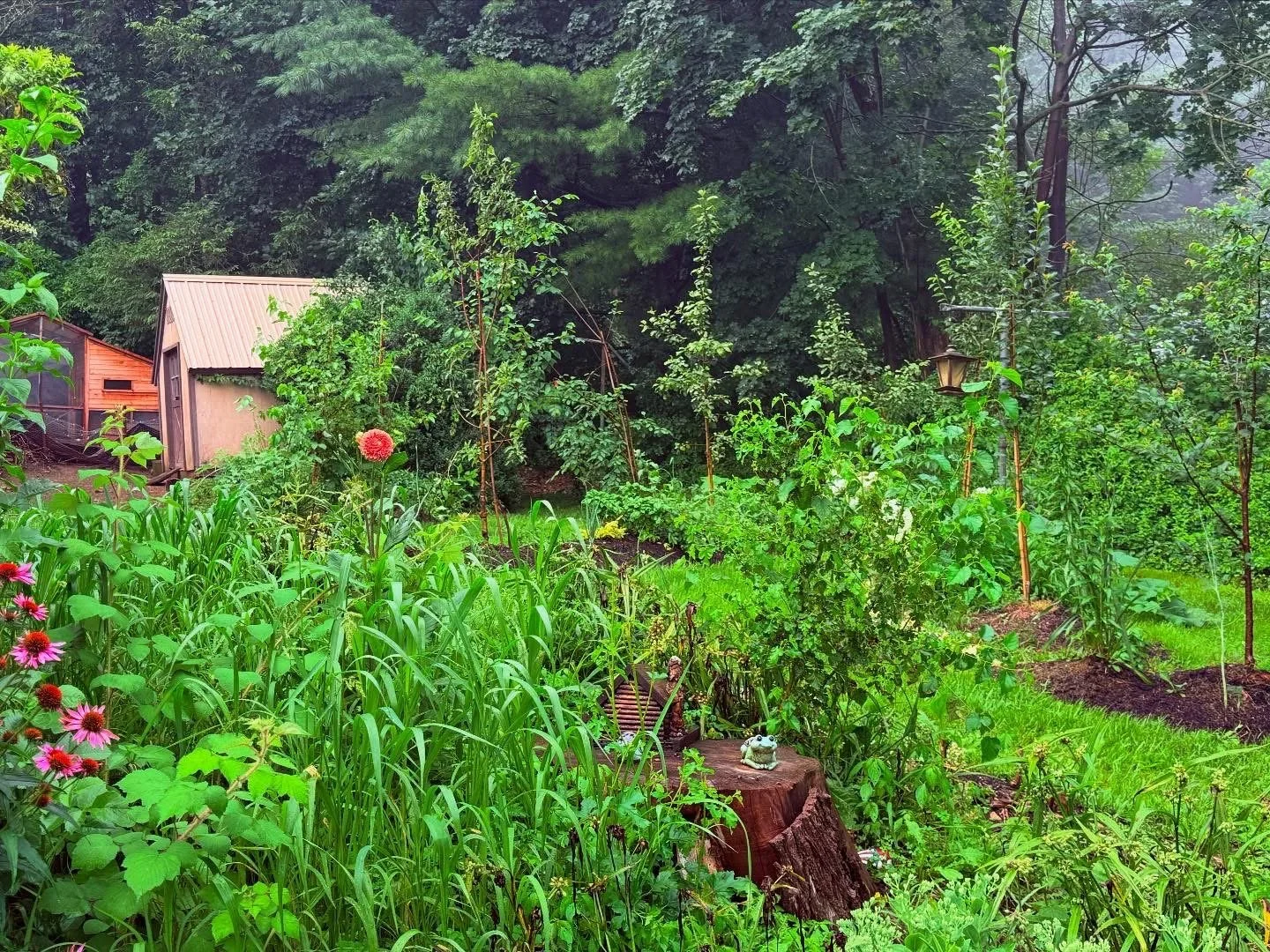
The Mountain
Modern man is kidding himself. We would be much wiser to step out of the way and let nature carry on its affairs while we watch and learn. The central truth here is that nothing need be done to grow crops. We must let go of our obsession and desire to control nature. It is a lie. It is selfish. It is not big picture thinking.
I love hiking and climbing mountains. Sometimes on a longer trek in the midst of the forest, I am just counting steps, checking my elevation, waiting to reach the tree line so I can get above it and see that 360 view. I try to actively remind myself of all the beauty along the journey up; the mosses, ferns, quartz and various stones, the birds in the trees, the sedge grass cluster, the beautiful bright fungi reaching like healing hands from the soil, the small waterfalls on the run, the smell of balsam pine. I remind myself that I am one with creation.
Fukuoka felt the same way, he described it in his writings. We can know the mountain by seeing it, just being there and observing, not examining, not extracting. This is not to say science is wrong to study further and further in more detail to gain an understanding. It's simply to state that without the whole picture, there's no point in studying the parts. To know a mountain, we must observe ourselves in relation to it. When we can forget ourselves and be one with the mountain, that is when we arrive at the truth.
Farming is conducted by nature. Same as the mountain. I really don't have much to offer it. I am better off listening to hear what each plant and critter has to say. Farming by the method of nature is a world alive, not a world taken apart. Man does not produce a crop. He can only look after nature.
"The tragic reality is that very few sustainable systems are designed or applied by those who hold power, and the reason for this is obvious and simple: to let people arrange their own food, energy and shelter is to lose economic and political control over them. We should cease to look to power structures, hierarchical systems, or governments to help us, and devise ways to help ourselves."
~ Bill Mollison

Observing Nature for solutions
We must accept that human knowledge is frail and imperfect. We will never know the submicroscopic universe or the whole of outer space. What makes nature perfect in a way we can not grasp is that it is infinite as well as forever imperfect. That is what it means to be natural. We can only learn to flow with the rhythms. Methods that are unnatural are thus always more imperfect, having more long-term downside, than simply seeking to mimic and farm with nature.
"When nature has been tainted and left unnatural, what remains? It is here that begins the never-ending toil of man."
~Masanobu Fukuoka
Sometimes it really is about restraining human action. We may pursue the cause and strive to correct our errors, but the goal must always be to return to the natural order of things. When we finally arrive at the conclusion that nature is perfect and we are not, then we can do the real healing, reflecting on our mistakes and returning as close to nature as possible. In permaculture, we work in one accord with nature, and this allows us a relaxed perspective, knowing it isn't just black and white.
This is real trust and understanding. Nature doesn't create our problems, and nature doesn't see our worries as problems at all. It simply is, and we might be better served to let it be. I'm not saying have zero method and never plan. I'm simply stating that we over concern ourselves and then lose focus on our road back to nature.
Our views are rooted in the self, but to the natural order, they are meaningless. Scientific farming is a method concerned with harvesting so much from a given field over a specific amount of time. It is confined to these notions. Permaculture and natural farming seek to transcend time and space, which is possible only by making decisions supported by a position of freedom and of keeping long term perspective.
We do the same thing to one another as we do to nature. There is a world without discrimination, a world of absolutes far past the grasp of the relative world where we insist that one must fall in line, and climb the ladder, constantly wrestling against space and time.
Nature is always showing us situations where life comes from life, where what we see as a pest or a weed is not a pest at all, instead it is holding an ecosystem in harmony. Life comes from life. It is the only way, but we bang our heads against it. There is an open-air classroom, but we stay in the laboratory or in the office on the screen. Tools such as AI might seem like a powerful way to spread the message of permaculture, but just as with most inventions of man, it has already led to ecological chaos.
Usually, when faced with insect pests, we have disrupted a pleasant living environment where both pests and beneficial insects once lived. The answer is simple, return that habitat. Don't take all the life off the land for your own gain. Don't build an AI data center there. We have plenty of room to survive with what nature provides, it is our perspective that must change. Just when we think we have seen the bigger picture, there is another view that is broader.
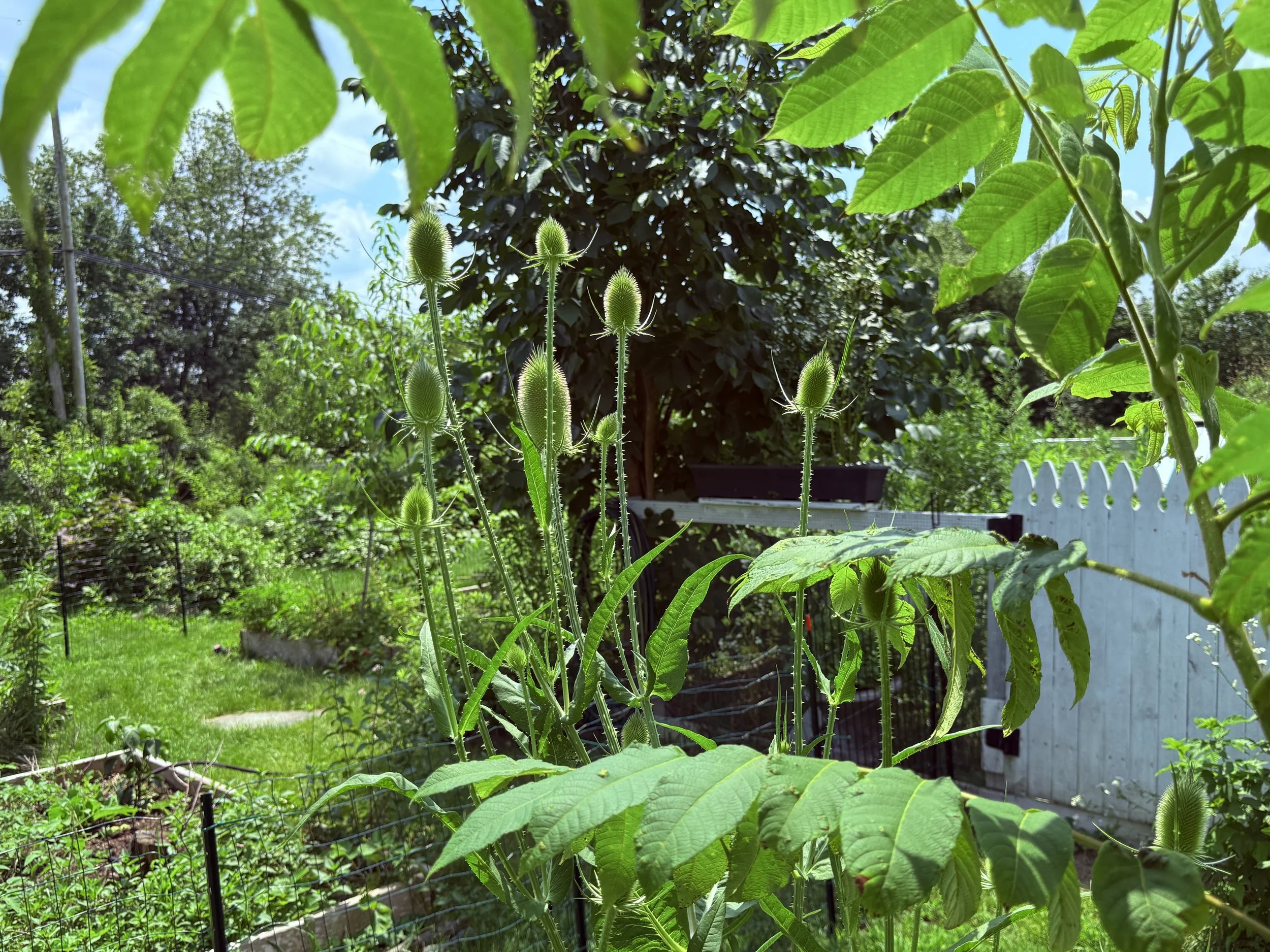
Don't let it stress you out. We were created, we are not the creator. The natural world is vast and deeper in knowledge than a mind can imagine. Broader and less discriminating knowledge has wider application.
"A jack of all trades is a master of none, but always better than a master of one."
~Anonymous
Permaculture seeks an embrace in the arms of nature. We try to obey rather than conquer. Believe me, there will still be fruit and wine.
"To the selfless, nature is always beautiful and sweet, always constant. Because all is fundamentally one."
~ Masanobu Fukuoka
Where to begin
There are many methods depending on what the land has to say.
One may establish an orchard and plant nursery stock using essentially the same methods as when planting forest trees. Vegetation on the hillside could be cut in lateral strips, and the large trunks, branches, and leaves of the felled trees would be arranged or buried in trenches running along hill contours, covered with earth, and allowed to decompose naturally like hügelkultur. We can also create on contour swales using the berm and basin method as well. Again, it is up to conditions on the land what choices are made. The process of natural soil building, and water harvesting may differ in the southwest of the United States where it is obviously a different climate than the northeast. Nature dictates her terms, and we are best served to follow them.
None of the vegetation cut down in the garden or orchard should be hauled away. In modern orchards, using bulldozers to clear land has become the rule rather than the exception, but a natural farm should be developed without clearing the land. When land is cleared with a bulldozer, irregular surface features on a slope are flattened and smoothed. Erosion is now at play and the latent seed bed exposed only to bring new "weeds" anyway.
Often wide farm roads are built to permit farm mechanization. However, mechanization only facilitates certain farm operations such as fertilizer and pesticide application. Since picking ripened fruit is the only major operation in natural farming, there is no need to go out of one's way to clear steep slopes. There is no need to degrade the land and compact the soil with heavy equipment. We are the opposite of captains of industry.
People usually think of a garden as a plot of land devoted to the production of vegetables and field crops. However, using the open space in an orchard to raise an undergrowth of special-purpose crops and vegetables is the very picture of nature. Create a forest canopy using your fruit trees, then berries and shrubs, then vining and herbaceous as well as ground cover plants. Take an interest in what they offer one another in a symbiotic relationship. This is the premise of polyculture guilds.
Nothing stops the farmer from having his orchard double as a berry, vegetable, and grain patch. Nothing stops him from having rows of Alley Crops or crops for regenerative grazing of animals.
Clearly, of course, the system of cultivation and the nature of the garden or orchard will differ significantly depending on whether the principal aim is to grow fruit trees of vegetable crops.
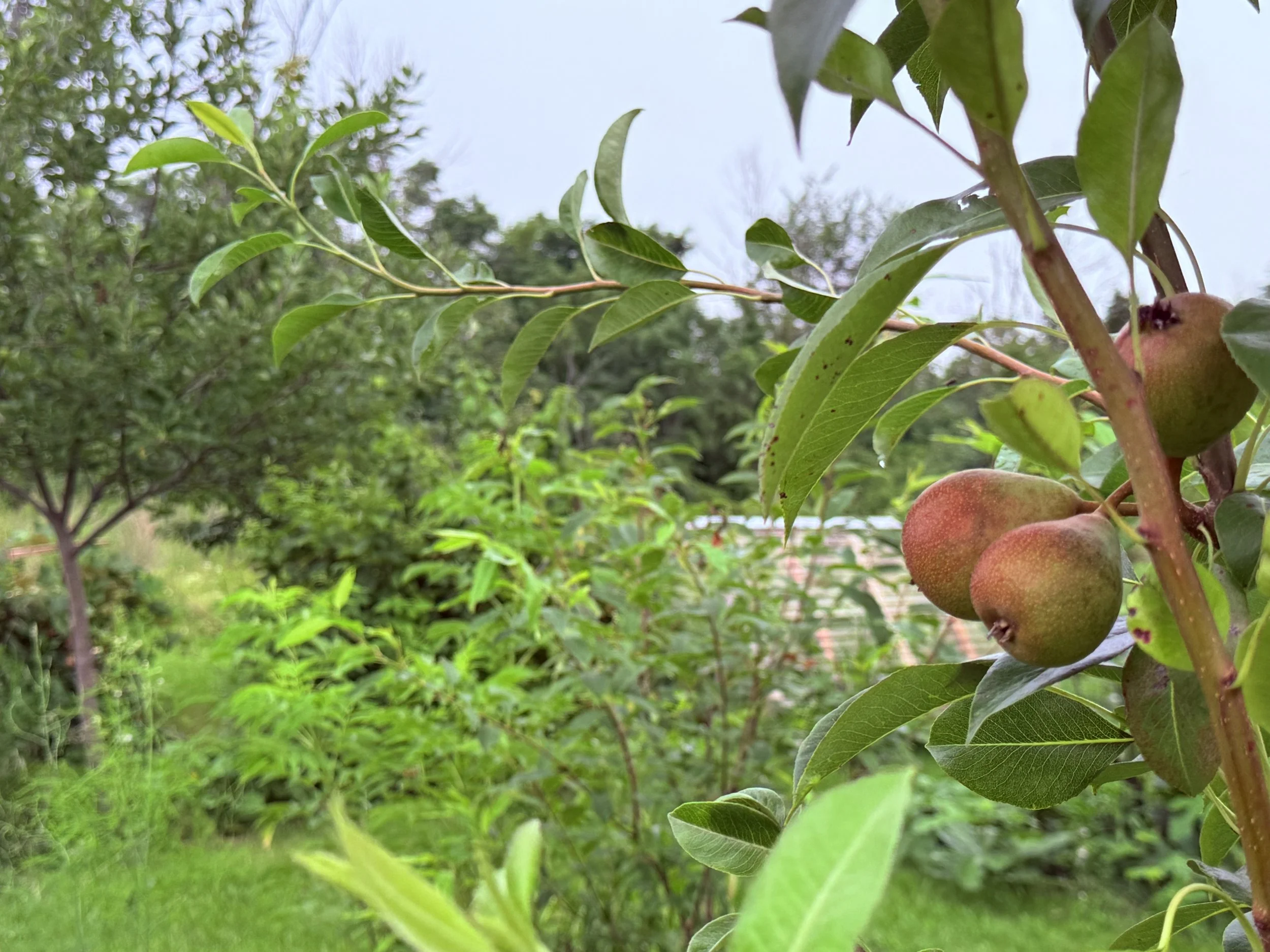
Building soil for Forest Gardens
Land to be used for growing fruit trees and intercropped with grains or vegetables is prepared in essentially the same way as an orchard. The land does not need to be cleared of all life and leveled. Rather, it should be carefully readied by burying coarse organic material in the ground or utilizing compost and mulch to build on contour mounds for natural irrigation. Even water harvesting trenches to support regenerative soil making can be dug easily by hand and filled with stone as a natural basin to irrigate slowly.
When starting an orchard, the main goal at first is to prevent weed emergence and mature the soil into a diverse organic matter rich material. Some of our methods like swale building or sheet mulching mounds on contour teach a way to do this quickly, often in a day’s work. But these goals can be accomplished slowly as well by allowing hügelkultur to break down, or simply by regenerative soil building from growing crops like buckwheat, flax, or even sorghum during the summer, and then sowing vetch, legumes, and winter beans in the cold season. The following summer, one might plant various beans, and in the winter, hairy vetch and hardy leguminous plants that grow well without fertilizers. The only problem with these is that they tend to inundate young fruit tree saplings, so planting slightly more mature trees does best.
As the forest garden matures, it will support any type of crop that grows in your zone. This does not have to happen overnight. Nature has her time. A plan might involve working it out through a few seasons. That is OK. We really can’t just slap it all together and expect amazing results without understanding that we must follow the longer-term patterns of nature and not just make rash decisions. That is how much of the land has become desertified and much of the rivers and seas polluted. Perhaps by some great fortune you have stumbled upon ownership of premium land that has already been naturally developed and checks all the soil fertility boxes. You will still do well to understand permaculture and regenerative approaches that follow natural observation.
"I can recall occasionally happening upon small paddy fields deep in the mountains far from populated areas and my surprise at how well someone had managed to set up a field in such a location. To the modern economist, this would appear as utter wretchedness, but I found the field a wonderful masterpiece reminiscent of the past-built alone by someone living happily in the seclusion and quiet solitude of the wilds with nature as his sole companion.
In truth, this place, with its artfully built conduit snaking in the shade of valley trees for drawing water, the rockwork that displays a thorough knowledge of the soil and terrain, and the beauty of the moss on the stones, was in reality a splendid garden built with great care by an anonymous farmer close to nature who drew fully on the resources about him."
~ Masanobu Fukuoka
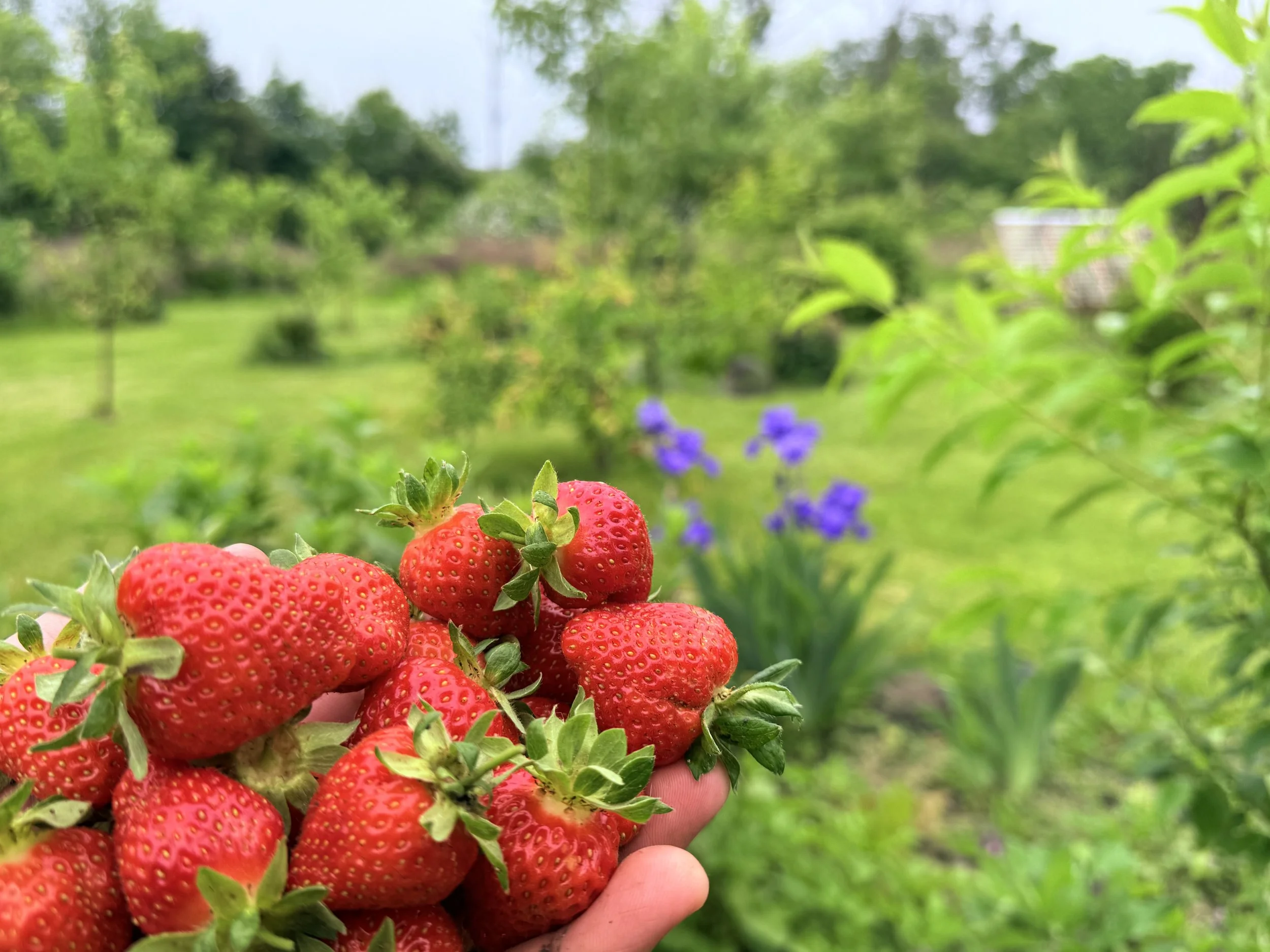
The spirit of the Permaculture Orchard and Natural Farm
As the beautiful agriculture scenes of hundreds and thousands of years past are quickly eroding away via waves of modernization, we might be better served to consider whether we can afford to lose the spirit of our farming forbears. They saw the farmstead as the arbor of their souls and gazed upon a thousand moons reflected in a thousand natural gardens. Haven’t we lost enough of cultural and vital knowledge. Time to return to our ancient roots.
Their work was in accordance with reality. Though the world is now upside down, what I'm speaking of exists still in every forest, in every unconventional and untouched wild meadow. This spirit waits in all man to reappear again, like a latent seedbed connecting him to the past, to his beginning, to our only earth.
What does this implicate then? How does this look in a permaculture orchard? Because fruit trees are continuously cultivated perennials, they are subject to the same struggles of any form of continuous cropping. The purpose of borders (the edge effect) such as having a protected woods and a ground cover of weeds is to resolve such problems naturally. This extends the life of fruit trees. In Polyculture Guilds, trees exist together with many companion plants such as other trees, shrubs, and undergrowth, in a three-dimensional rotational cropping relationship. Fertilizers and inputs become hardly necessary as each is serving several functions naturally.
When vegetables are grown beneath fruit trees, the number of insect pests tends to be low. Some diseases and pests are common both to fruit trees and vegetables, and some are not. This produces a host of different natural enemies that emerge at various times of the year. If a balance is maintained between the fruit trees, the vegetables, the insect pests, and their natural predators, real damage from disease and insect attack is a non-issue. For the same reasons, the planting of manure trees, windbreak trees, and combining planting of evergreens and deciduous trees is helpful in diminishing damage.
In most cases, serious disease and pest damage in fruit trees is generated by diminished health of the ecosystem, the soil, or the health of the tree itself. A lot of things can lead to this. Improper pruning into a confused tree shape with cross branching, poor ventilation, inadequate light, or a combination of all these factors.
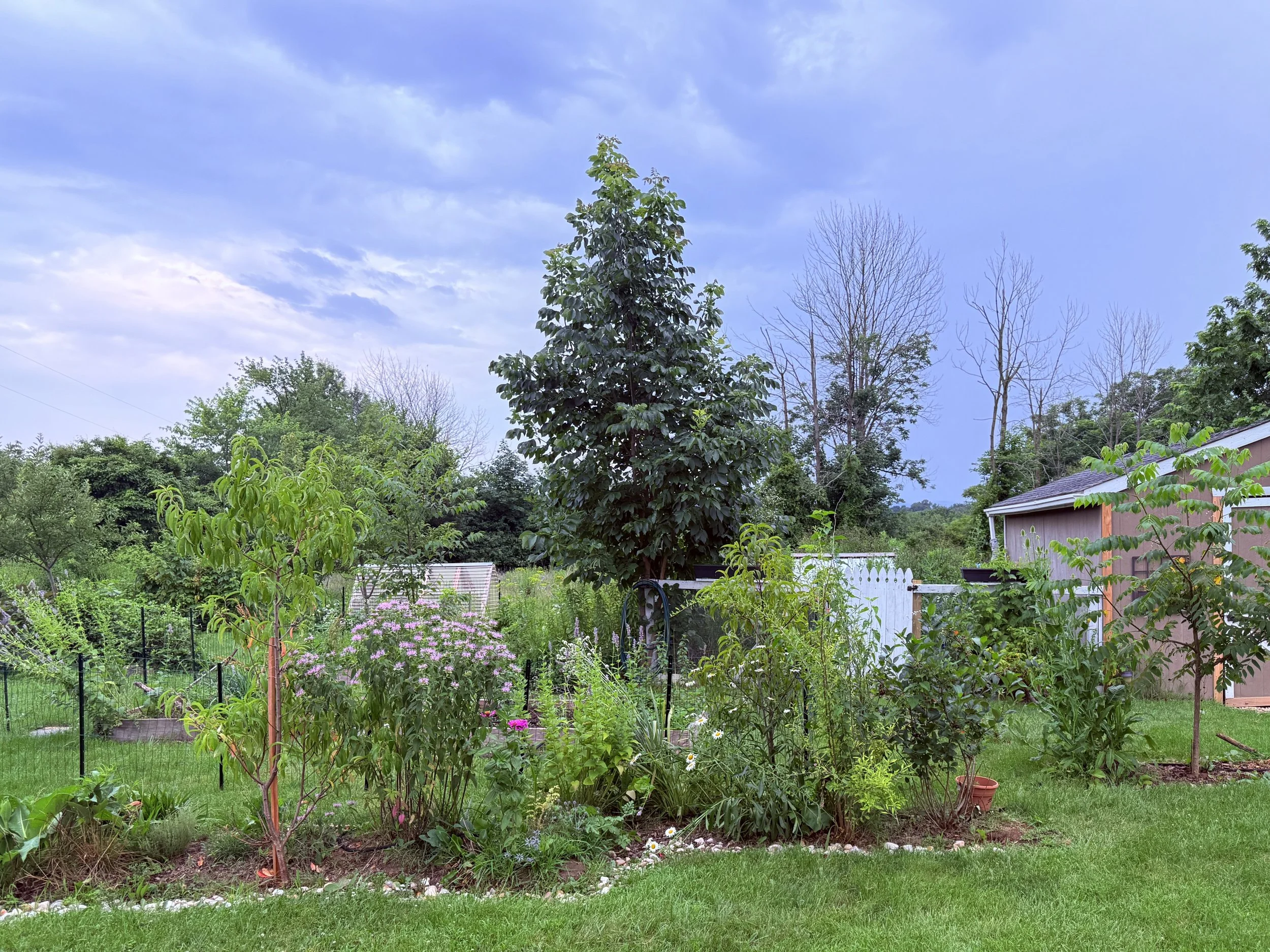
Native habit, perimeter planting, ground cover of diverse crops, and the combination planting interspersed nitrogen fixing trees and shrubs can be regarded as basic self-defense against disease and pests. Using permaculture and natural farming methods to cultivate fruit trees creates a diverse, dynamic, and beautiful forest garden or natural orchard. More than just a place for growing fruit, this totally organic orchard becomes an integrated community that includes fowl, livestock, the winged critters, soil microbes, and man as well.
We are not separate from nature. We must develop our agricultural endeavors to operate in symbiosis. There is no reason why we cannot feed ourselves and the whole world in this manner.
"Remember the days of old; consider the generations long past. Ask your father and he will tell you, your elders, and they will explain to you." Deuteronomy 32:7
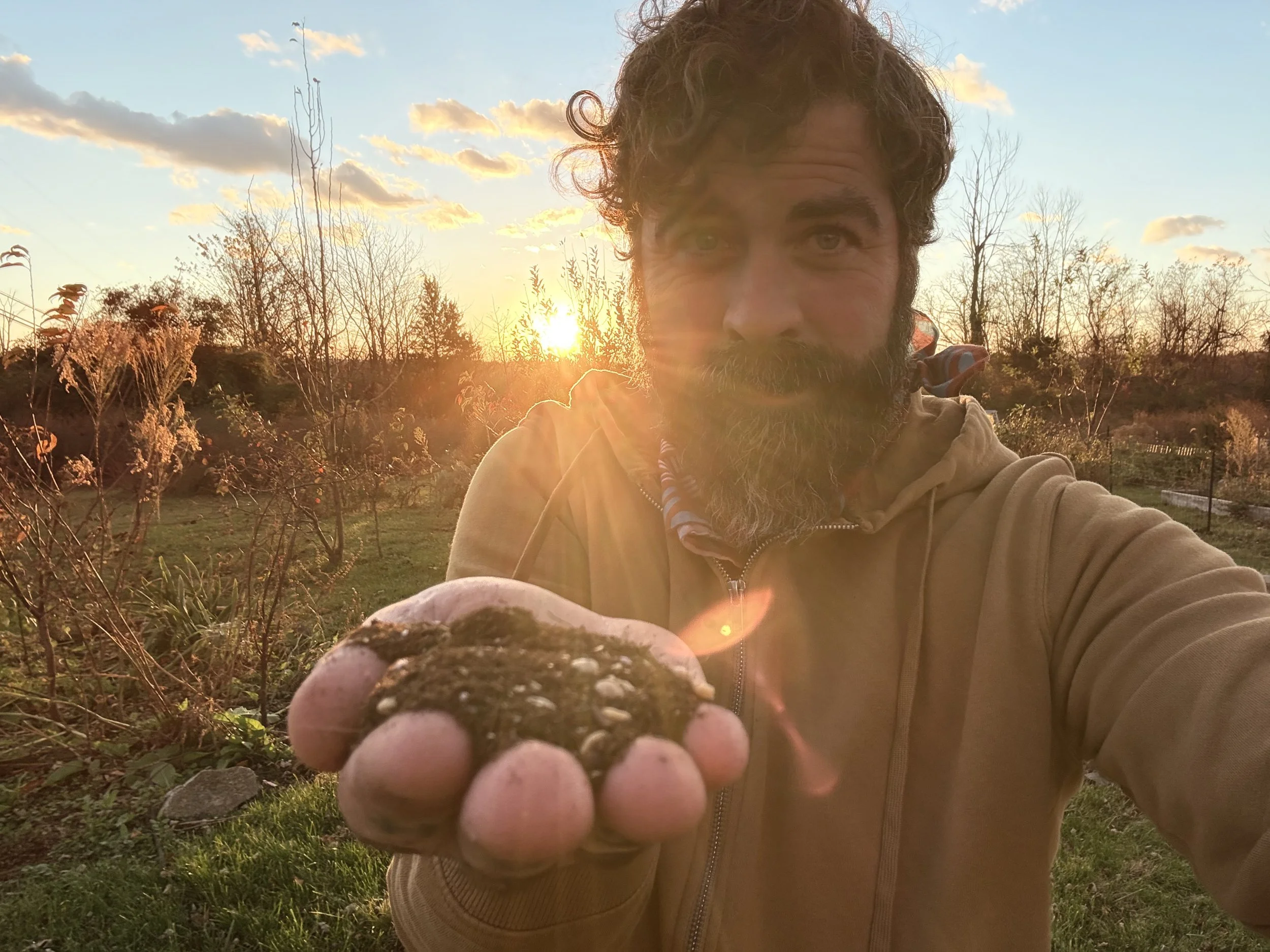
You know... It's not just the wisdom held in the past. It's the comfort of knowing we survived throughout the ages in times of what we think of as less. But was it really less or did we have long term vision, a better understanding of the bigger picture?
We hear stories of how perilous things were for man throughout periods of history. In recent years as well, there have been truly hard times, but those times were often caused by man's own foolishness. So, one must ask? Are we playing the same broken record on repeat while calling it progress? If our belief is that knowledge is gained through observation, it is clear that modern life has more greed, more hate, more weapons, more power, more control, more wealth inequality, more cancer of the body and mind, more desertification, more pollution, and so on. I'm not interested in any of it beyond how it can serve the greater good, and even then, I have become cautious, jaded, and callused by the evidence.
The Seventh-Generation Principle still bears repeating. That’s what drives our efforts. The future deserves the same opportunities as the past. We can have that kind of vibrant agriculture, a spiritual and creative life connected to nature, a happy return. This is a reminder, dear reader, that it is certainly worth working for.
Peace, Love, and Permaculture,
Tyler Heitzman - Ancient Origins Permaculture