Permaculture and Natural Farming: Theory and Practice Part II
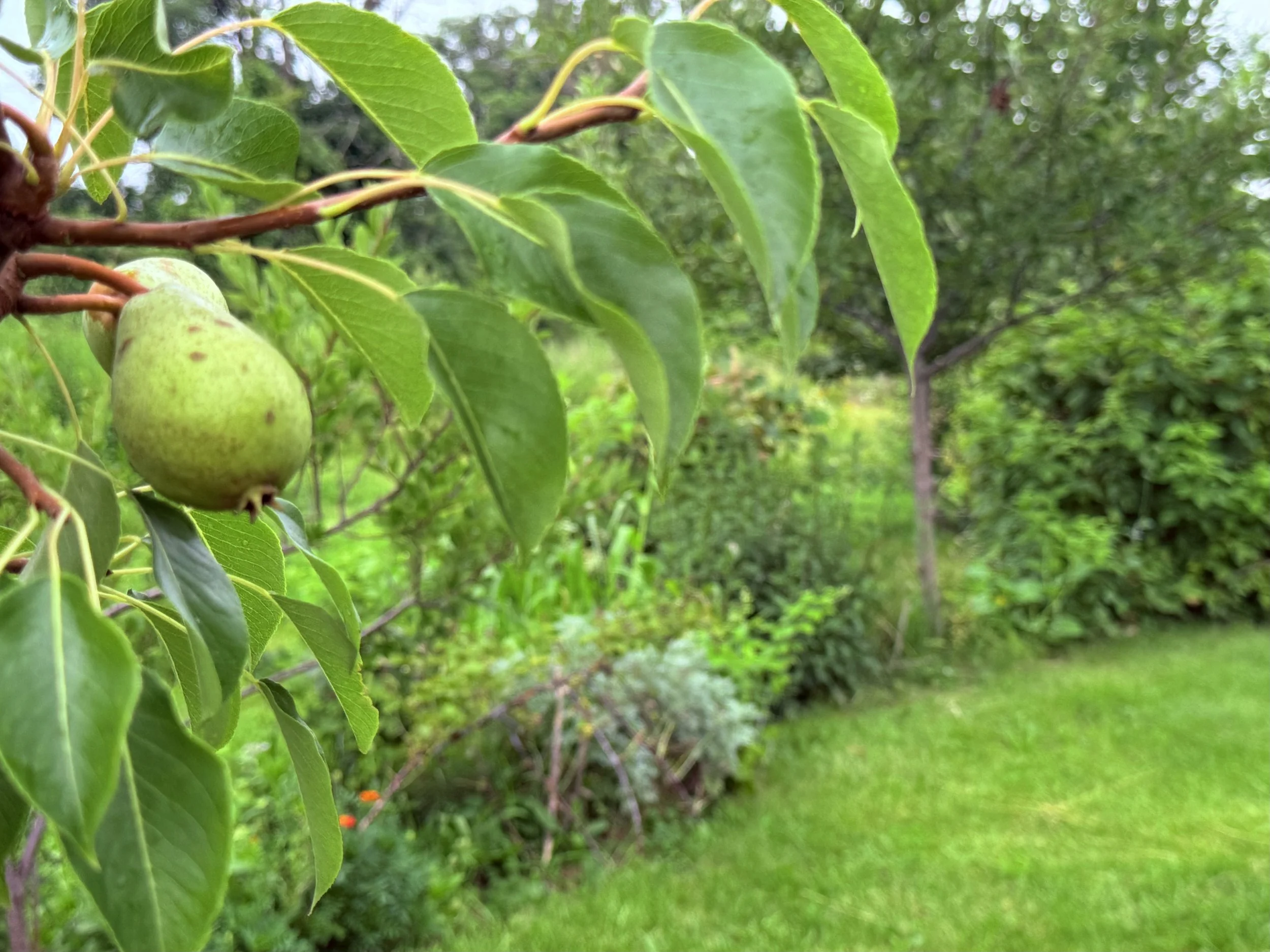
I felt like the previous educational blog needed a book end. I'll always be a student of the earth, but I have spent the time to learn and the effort to gain experience, so why not share the whole picture as best I can. The small farm is enough to feed the world. Forget acres and acres... we are talking a quarter acre at time. They convinced you otherwise. They stole and destroyed the land. They outsourced your happiness and wealth one piece at a time so you did not notice. Your life got squeezed while the wealth of captains of industry and leaders of nations flourished. I can't tell you how to get it all back, but I have learned what we all can do to be less and less relient and more and more resilient. Then one day we will awken to a dawn where we have finally starved the beast of mankind's greed.
In the no till farming that has been studied, growing in diverse Polyculture guilds, and utilizing clover and other ground covers proves great for soil building, for boosting the soil food web, for holding water, and retention of nutrients.
Seasonally rotating in restorative crops that also produce a yield is important. It's a basic concept similar to succession planting. In fall, around late September/October, you would be direct seeding winter grains, flax, buckwheat, alfalfa, winter rye, daikon raddish, or winter peas. Then you would harvest what you wish while cutting and laying stalks down like straw or perhaps in the spring comfrey leaves and orders as weed provention, composting and adding to the soil organic matter as well as nutrition content right there in place. Basically using this as mulch to cover your beds. Your annual vegetables can be grown by sowing into this in the spring. If I feel seeds need to be tucked in nicely I will use some light compost or an organic seed mix when planting, but such a light layer. You can also coat seeds with some clay or in the case of many annual vegetables grow them early in a greenhouse and then transplant them. You can just do this in a continuous cycle in productive on contour rows or in Polyculture guilds around fruit trees in an orchard. Essentially an orchard than becomes a diverse food forest that is capable of its own cycles of clean water, carbon sequestration, nutrients, fertilization and overall regeneration. That's the systems we design for. We call it a closed loop.
Did I mention that all of this work can be done with a sickel, a pick, a hoe, shovels, and other hand tools. Even the building of swales, trenching and directing of water can be done with tools like a pick a shovel, and a handmade A frame level to keep us on contour. Remember that in permaculture we are using what the land gives us, that includes working with contour and making the smallest changes for the most effect.
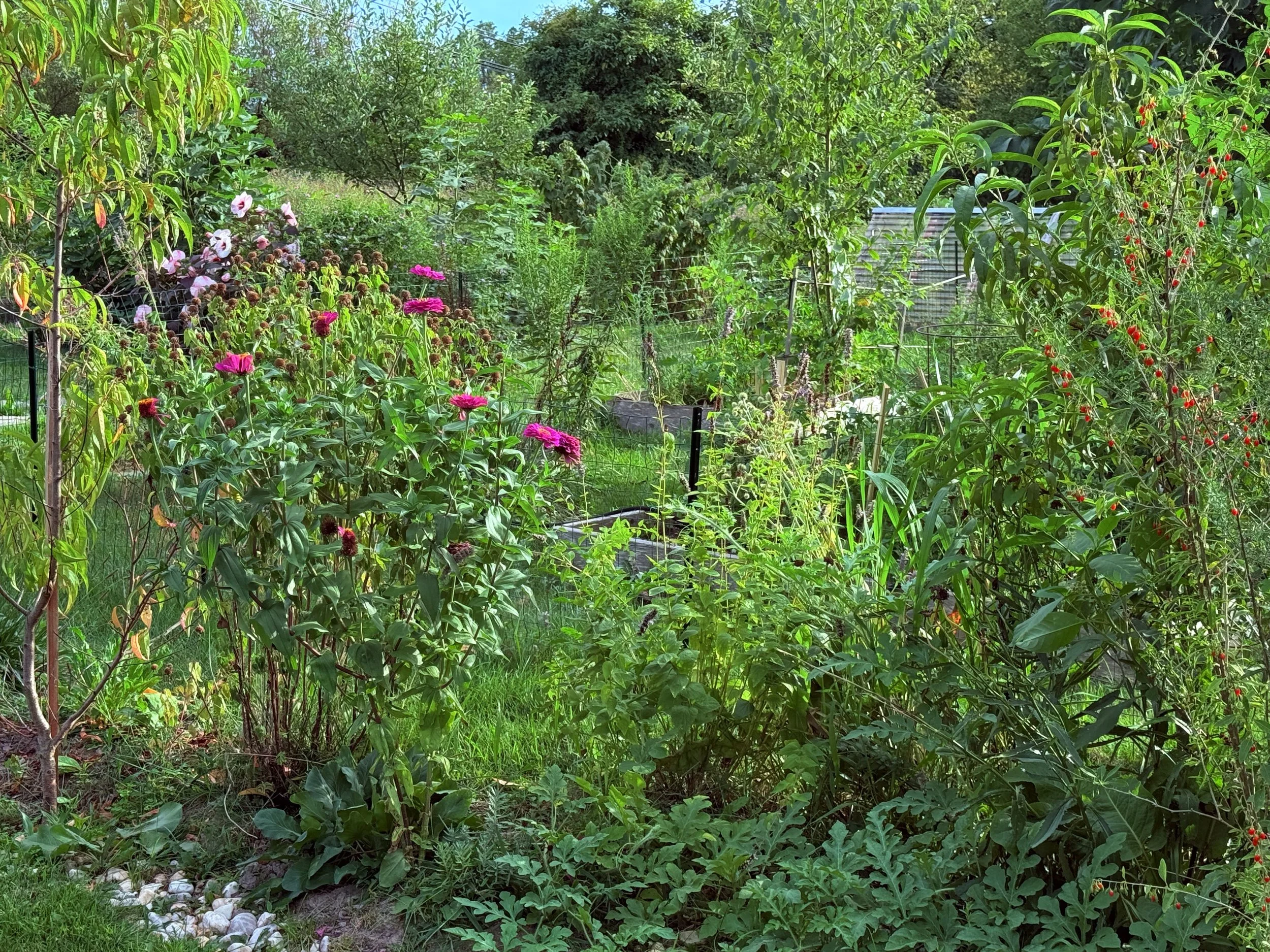
Nature's energy is what produces our yield. When the work is spaced and utilized and cycled in harmony, nature is surely dynamic enough to replenish. We may think of chemical fertilizers and pesticides as methods to push the limits of production. We may even have good intentions, but the results are always catastrophic in the end. Permaculture is responsible farming and gardening. All we really do is keep watch over the earth.
Rather than plowing the fields for growing crops, we protect the vitality of all the organisms inhabiting the earth. In doing so, we guard the natural order. The myriad of quick fix, anti-natural process practices we have been using to feed the world destroy the ecosystem and disrupt the natural cycles. Folks are frustrated everywhere, because they have disrupted the flow of life.
I sometimes like to think I am a steward or keeper of the earth, but maybe our most important mission is to starve out the systems and captains of industry who would ravage and lay the entire planet to waste for dollars.
"The guardian of a watermelon patch does not watch the watermelons, he looks out for watermelon thieves. Nature protects itself and sees to the boundless growth of the organisms that inhabit it. Man is one of these; he is neither in control nor a mere onlooker.
He must hold a vision that is in unity with nature. This is why, in natural farming, the farmer must strictly guard his proper place in nature and never sacrifice something else to human desire."
~ Masanobu Fukuoka
Before pulling all the weeds, permaculture asks why they are there to begin with. Are they a by-product of our actions, or did they arise spontaneously and naturally? Are they here to fix the soil? If the latter, then they are of great value and should be left to grow with a bit of maintenance. Remember, this is not a pristine lawn, so it doesn't require weekly mowing or attention. The natural farmer cares a lot, so he/she allows for plants that protect and regenerate the soil to carry out their mission.
Green manure on your rows, or a diverse herb guild thriving at the foot of vegetable plants and fruit trees increases all the forms of energy regenerative soil needs. In permaculture we see this as a close to natural state. Conscious design means mimicking the ecological harmony we simply have to observe.
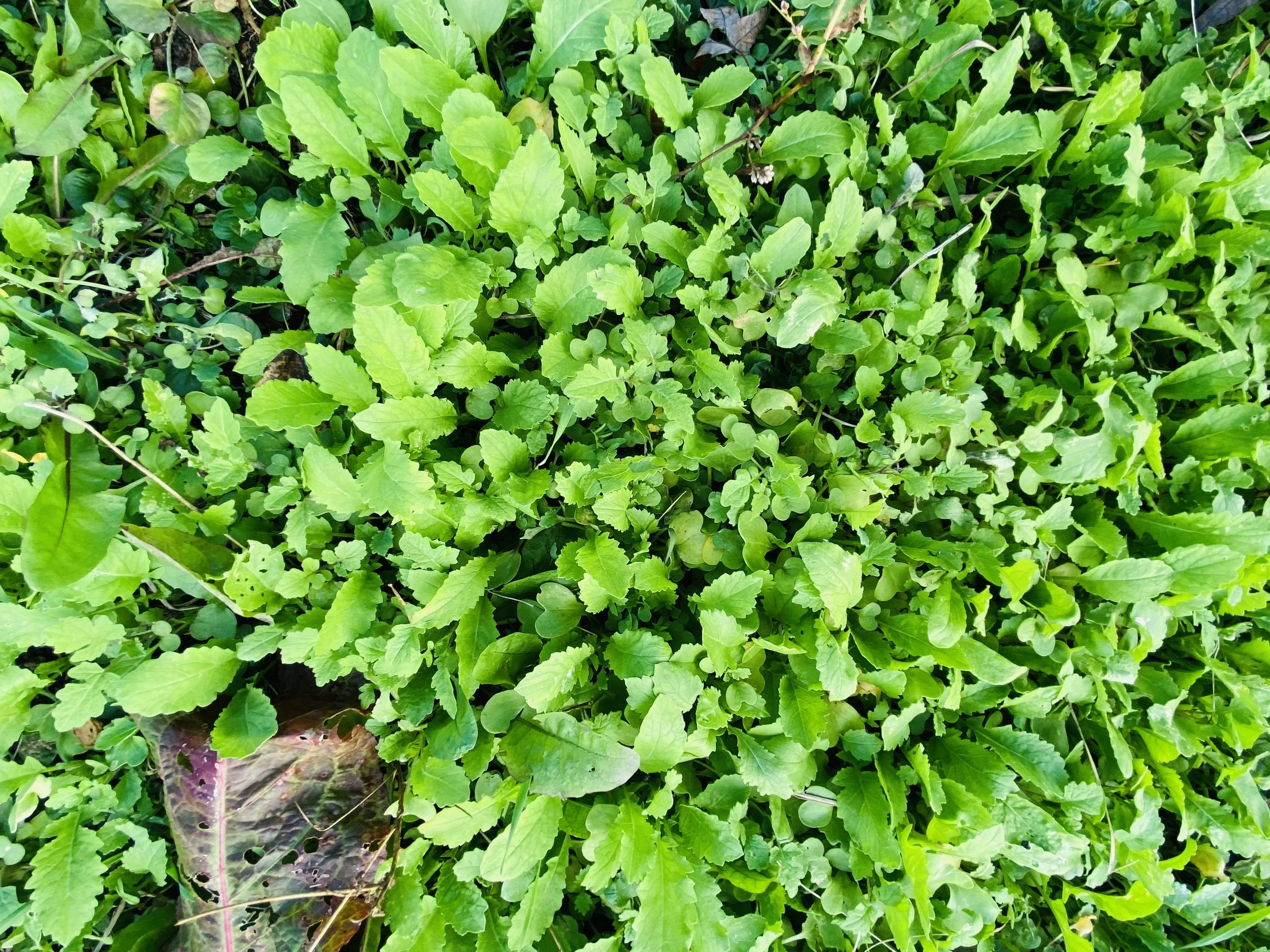
-Cover crops sown in late September
The same general methods used in rewilding a forest can also be used to plant a permaculture food forest or agroforestry orchard. One should not clear and smooth the land like a bulldozer. We are only destroying the humus-rich topsoil like the forest duff layer, built up over many years. Land plowed and left virtually bare for ten years is washed free of its topsoil, shortening the economic life of your farm, and destroying the soil ecology. Harmony is immediately lost in your first act.
Maybe you wind up with a few trunks, some branches, and leaves of felled trees from a cleaned up orchard site. You might arrange this material along contour lines and wait for it to decompose naturally. The branches, leaves, and roots of the trees decompose after several years, becoming a source of organic fertilizer that supplies nutrients to what is now growing fruit trees. Place these in layers (you can even dig and bury them in arid conditions), biggest branches and logs down first, then twigs and then leaves. You can then put manure and compost on top. At that same time, grow a cover of organic matter to curb weed growth, and prevents soil loss. Cover crops also stimulate the proliferation of microorganisms. When timed appropriately and thoughtfully placed, cover crops are foundational in regenerative farming and can include many great staple human foods.
As for tree roots, they work their way down to the deepest soil strata, contributing physically to the aggregation and structure of the soil. They serve as a nutrient source and have a chelating action that solubilizes insoluble nutrients in the soil. If such valuable organic matter is dug up and disposed of when the land is cleared entirely, this drastically changes natural conditions and damages the soil immensely. Not to mention this changes the contour of the land as well as it's ability to slow and hold water.
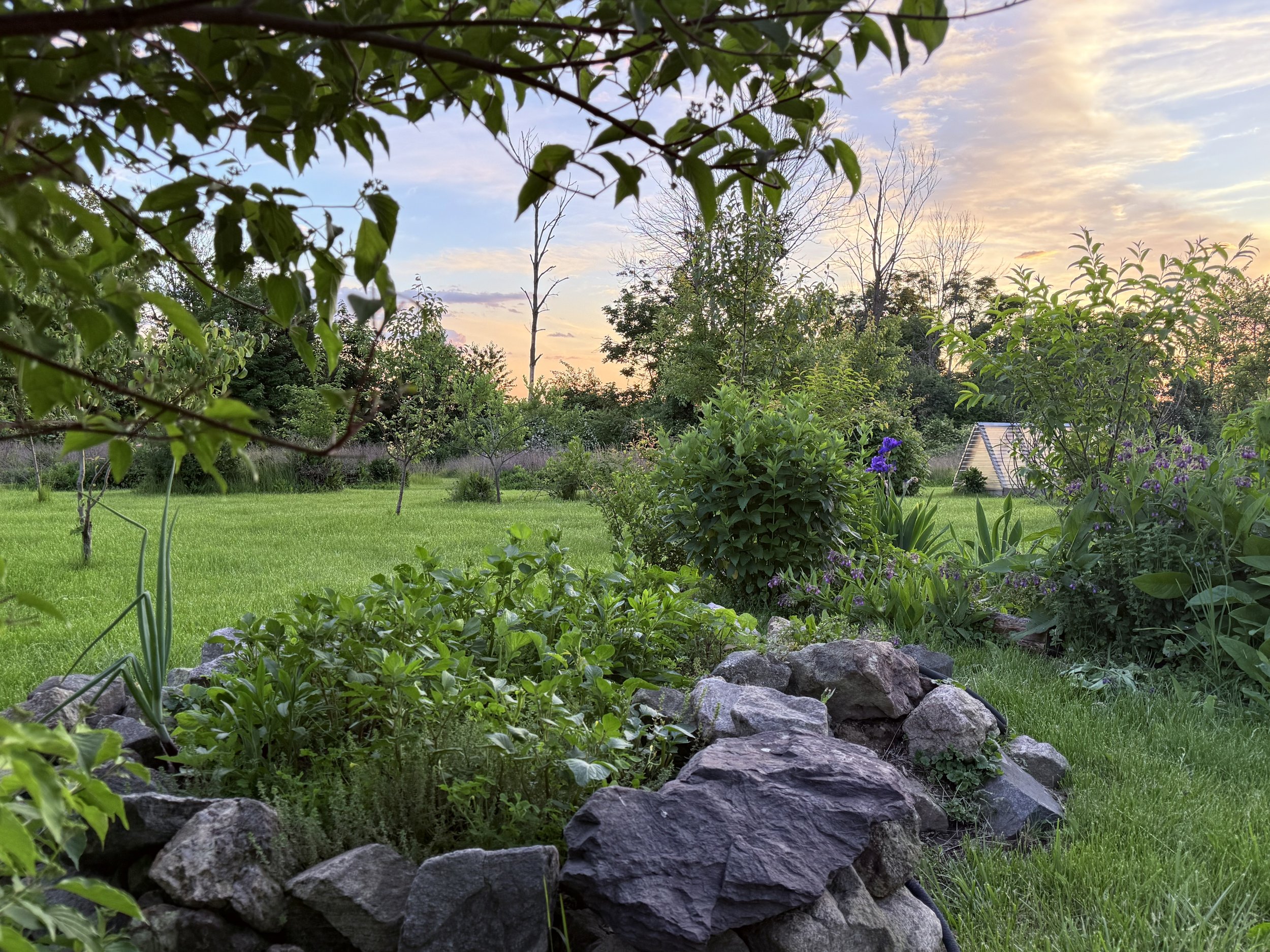
A one foot by three foot row of rich organic soil can possibly supply enough nutrients to a fruit tree for ten to thirty years. A perennial based regenerative soil building guild concept could potentially allow this to thrive indefinitely. Perhaps a forest that proliferate itself after when we are gone.
Fukuoka stated that "If it were possible to use the rich, fertile soil of a natural forest in its natural form as a hot bed, cultivation without fertilizer might even be feasible."
Humans seem to expect tree growth and fruit harvests to suffer when fruit trees are planted without clearing the land and keeping it tidy. But Permaculture and Natural Farming's approach of ecosystem harmony in fact increases the ecology while increasing the economically productive life of the land.
After preparing soil in swales or mounds, the next concern is planting. Fruit trees should be planted at intervals that allow for density, but so that their future canopy does not crowd along the contour. Layer your rows from tallest to the north and the smallest species of trees then shrubs then herbaceous plants and so on. The shorter plants being in the rows further south or if planting in guilds, a sun loving plant obviously need be planted on the south side of a tree or bush.
Now you have fruit trees. How will you weed the forest garden or orchard? How will you prune and shape the trees? Please don't prematurely chop off branches during early pruning. A trees natural shape is honestly best. Too much pruning can turn out to be harmful when done unwisely. Allow the tree to take its natural shape. Study and learn the natural form of your trees.
It is easy to assume that a tree grown in a natural state will easily take a natural form, but it's not just through abandonment that a cultivated tree takes on a natural form. We have to allow our trees the time to form naturally while giving careful attention and protection. After all, your reading this because you love trees just like me.
As far as weed suppression around newly established trees, instead of constantly cutting back underbrush, we can suppress weed growth by broadcasting clover, or if you want a harvest/animal fees, broadcast alfalfa, or buckwheat seed over the entire orchard.
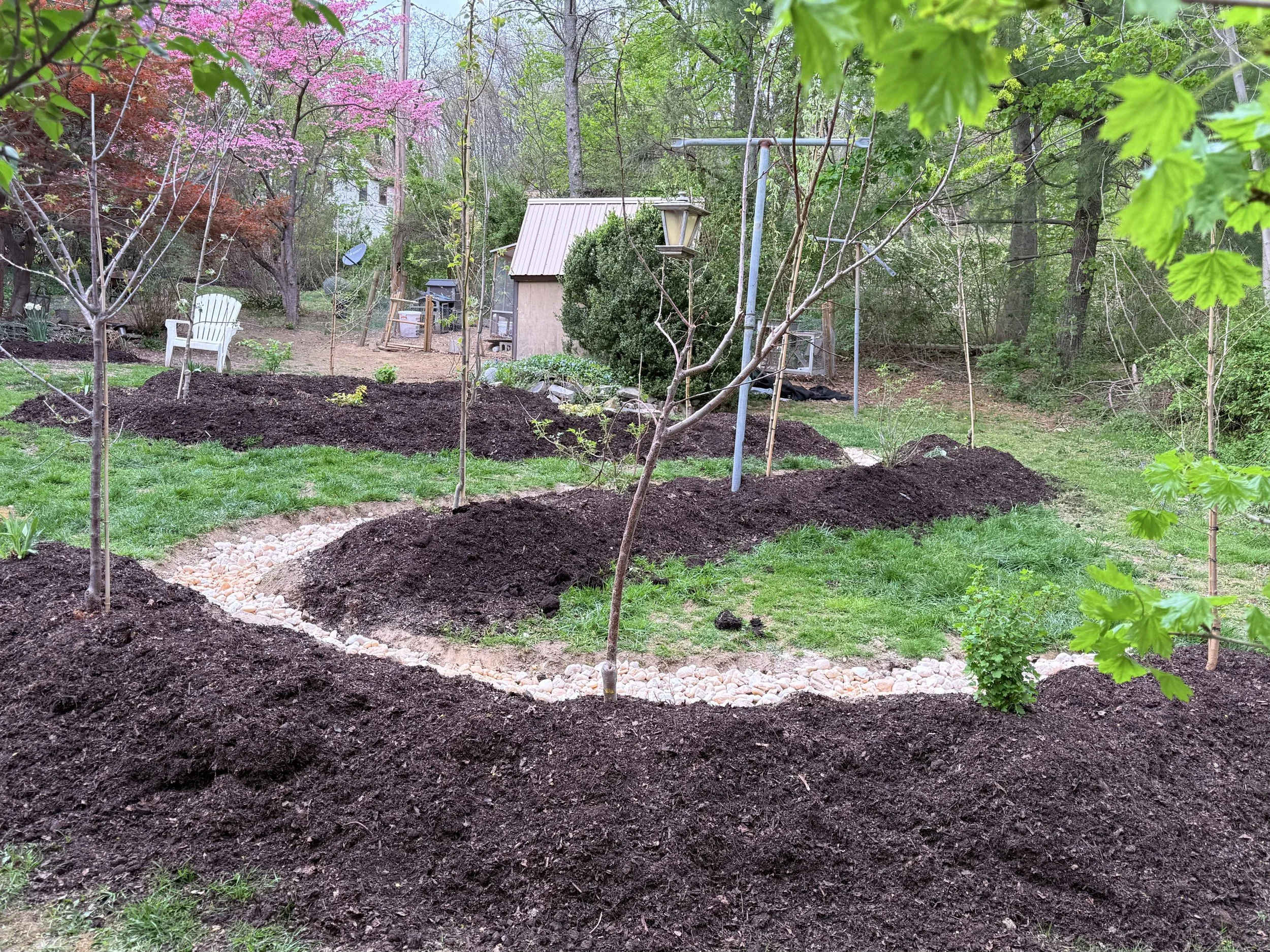
To create a permaculture orchard, we must use the principle of observation. As diverse as we like to be, there are the right crops for the right land.
Often we avoid monoculture like the plague, we plant deciduous fruit trees together with nut trees, and evergreens and berry bushes. We interplant green manure trees. We plant nitrogen fixers like aronia, serviceberry, and elderberry. We ultilize members of the pea family, which produce nitrogenous fertilizer as well. We interplant some larger Keystone species trees. We plant shrubs, climbing fruit vines like grapes and hard kiwi. We involve native habitat and we really love to plant gooseberries.
Leguminous green manure plants and other herbs that enrich the soil may be planted as orchard undergrowth. Forage crops for the farm animals, and perennial or more niche vegetables can also be grown in abundance. Our animal friends can be allowed to graze freely in these orchards. Silvopasture and alley cropping type methods have long been done this way to benefit the land and the animals at once.
A Food Forest or Permaculture orchard in which full, three-dimensional use of space is made in this way is entirely different from conventional orchards that reauire high-production techniques. It allows for nature to do much of the work. Ours is an aim to live in communion with nature, to create paradise on earth.
The purpose of soil management is to promote the conversion of dry clay or weathered material from bedrock and stone into soil suitable for growing crops. The soil must be turned from dead, inorganic matter into living, organic material.
Unfortunately, soil management as it is recently practiced consists basically of cultivation that turns the soil into lifeless mineral matter. Repeated tilling and weeding, the application of chemical fertilizers, and overmanagement increases yields and provides an abundant product now. However, we are left with the question of whether that product is still nutrious and good, or lifeless and even harmful to our bodies as well as all of the ecology of the earth who suffer our actions.
The soil becomes depleted with constant plowing and weeding. Even just using a single cover crop that can be chopped and dropped, or just straw ground cover is better, though hardly ideal. Only a method that enriches everything at once in a loop makes any sense. That's the permaculture approach.
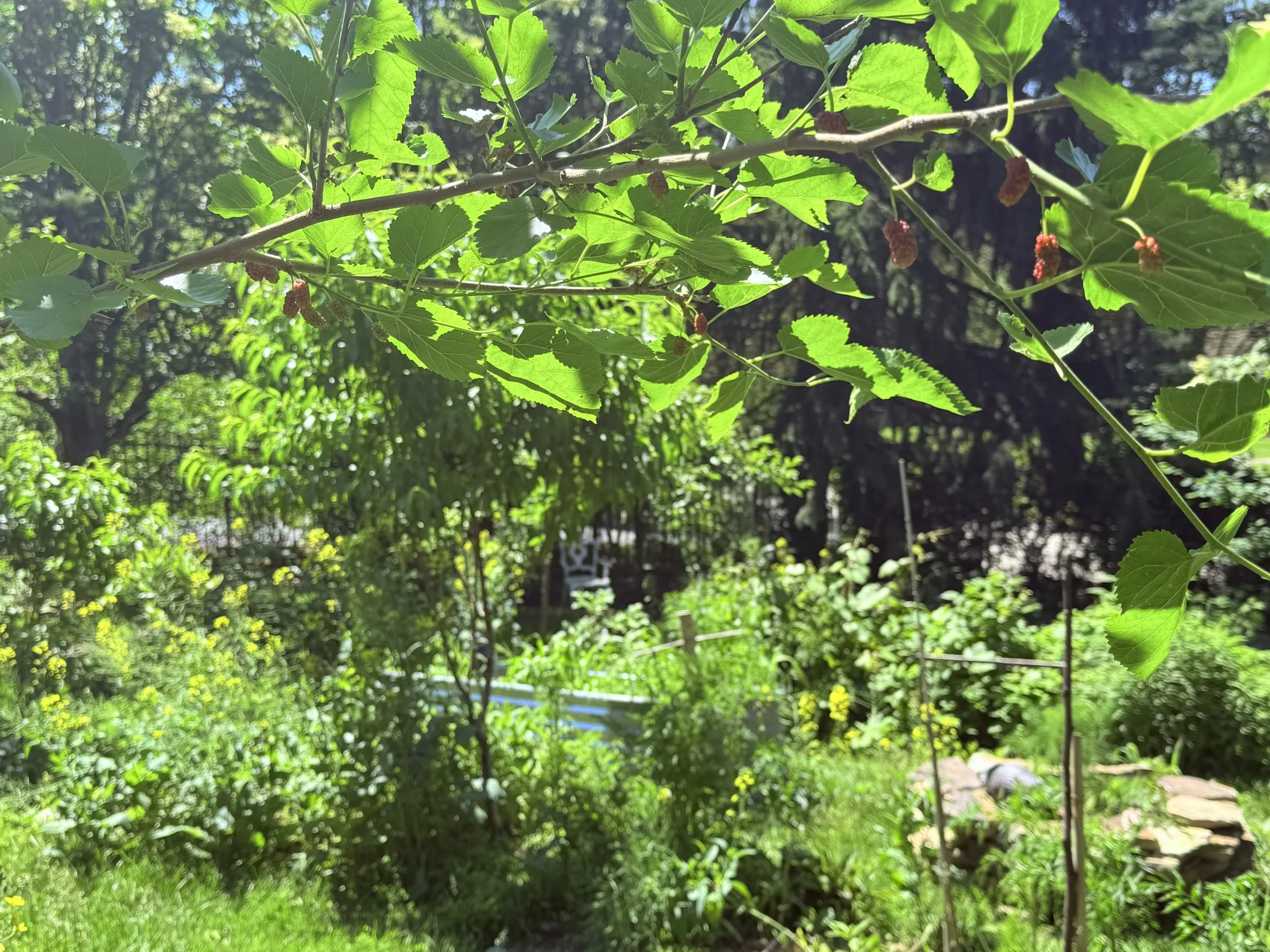
In order to make full use of the soil, soil management should be based on the use of diverse ground cover. This enables soil in the pasture, garden, or orchard to become naturally enriched. It is much wiser to encourage enrichment through the organic matter, dense planting, and soil life rather than to apply chemical fertilizer.
One great ground cover is Alfalfa. Alfalfa is very deep-rooted, sending roots down to depths of six feet or more. This makes it ideal for improving the deeper soil layers. It is a hardy perennial, and absolutely practical thanks to its resistance to drought and cold conditions as well as high temperatures.
When mixed with clover, alfalfa helps to eliminate other weeds well. Other legumes that provide appearance interests such as lupine may also be used with good results. Both buckwheat and sorghum are good options as well.
What should or should not be used as a cover crop for soil improvement depends largely on local conditions and timing. All plants emerge for a reason. A succession of different herbaceos species takes place over the years as the soil becomes richer. By sowing vegetable seeds and alley crops like winter rye mixed into clover or alfalfa, we outcompete the weeds at their own game and they will eventually go away on their own.
Intercropped vegetables are fitting food for the people and can be grown year after year around perennial fruits and medicinal herbs in their proper season. I will come back to this later, but in addition to being an effective means of controlling weeds, sowing vegetable seed among the weeds is also a powerful soil improvement technique. Legumes build up nitrogen, drillers like radishes soften the earth and make it more permeable for holding water, and the roots of all these plants take part in the rhizophagy cycle where nutrients are transferred via cells from fungal and microbial life to the plants and then back again to the soil. We are all about these cycles.
One can understand much of the nature of soil by examining the weeds growing in it. Weeds solve the problems of the soil, but can create a problem for us.
Soil improvement by natural farming can take a long time. So we often turn this into a short time by throwing large amounts of coarse organic matter and organic fertilizer onto the land in on countor mounds. I admit that this requires tremendous outlays for equipment and materials. I admit that it is a privelage to order up 40 yards of mushroom and leaf compost and have quantities of aged manure delivered right to the site so that we can fast track a project.
Five to ten years are needed to build up six inches of topsoil through soil improvement by the cultivation of cover crops alone. Animals and regenerative soil building approaches can speed this up a good bit. In a fast paced economy and a world that wants it all within twenty minutes of ordering from a cell phone screen, this is a disadvantage of natural farming methods. Perhaps these methods appear inferior in a world so pressed for time, but if farming were to be correctly aligned as a legacy and part of culture to be preserved for future generations, the general opinion of Permaculture would surely improve.
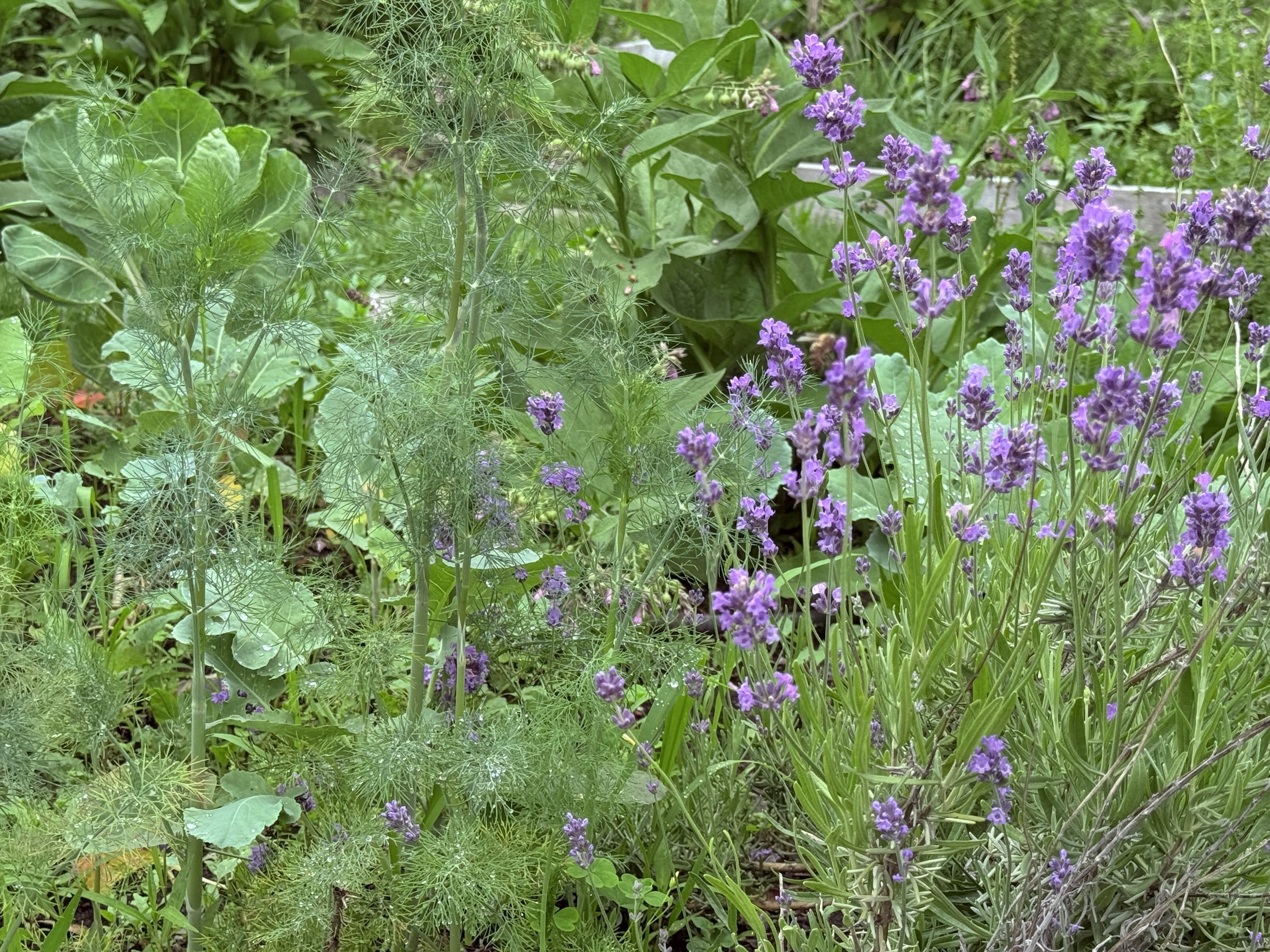
Land that grows fertile over time without plowing, weeding, or chemical fertilizers represents not only an accumulation of labor and capital, but an increase in the unseen forces, the intangible things in life. Human effort alone has only a temporary effect. Permaculture makes use of the forces of little living organisms to physically and chemically improve the soil, a process that goes hand-in-hand with the fruit and vegetable growing. The beneficial effects of this approach ultimately show up in an extended lifetime of fruit trees and perennial systems, which is perhaps two to three times that of fruit trees grown by overly industrialized approaches.
Nature is always perfect. It's is up to us to understand her designs. For instance, in a given plant, leaves always grow either alternately or oppositely. The direction and the angle at which a leaf grows is always the same; there's not even the slightest deviation. If the angle between one leaf on a branch and the next leaf is 70 degrees, then all the other leaves will emerge at respective angle of 70 degrees. The arrangement of the leaves on a plant always obey a fixed law called phyllotaxy. It may seem odd, but it's is purposeful.
Unless a tree was pruned, the direction, angle, and divergence of a shoot or branch is regular and orderly. One branch never crosses over another causing rubbing and creating vulnerability. The branches and leaves of naturally grown plants all receive equal ventilation and sunlight. The don't overlap and suffocate. There's not a single wasted leaf in the true natural form of a tree.
All this is abundantly clear when we look carefully at pines on the mountain. The central trunk rises straight. The trees puts out branches at equal vertical spacing around the radius. We can clearly make out the order of branch emergence. The spacing and angle of the branches is regular and orderly. Rarely ever does one branch grow longer or cross another branch. Trees observe the phyllotaxy and divergence specific for their species.
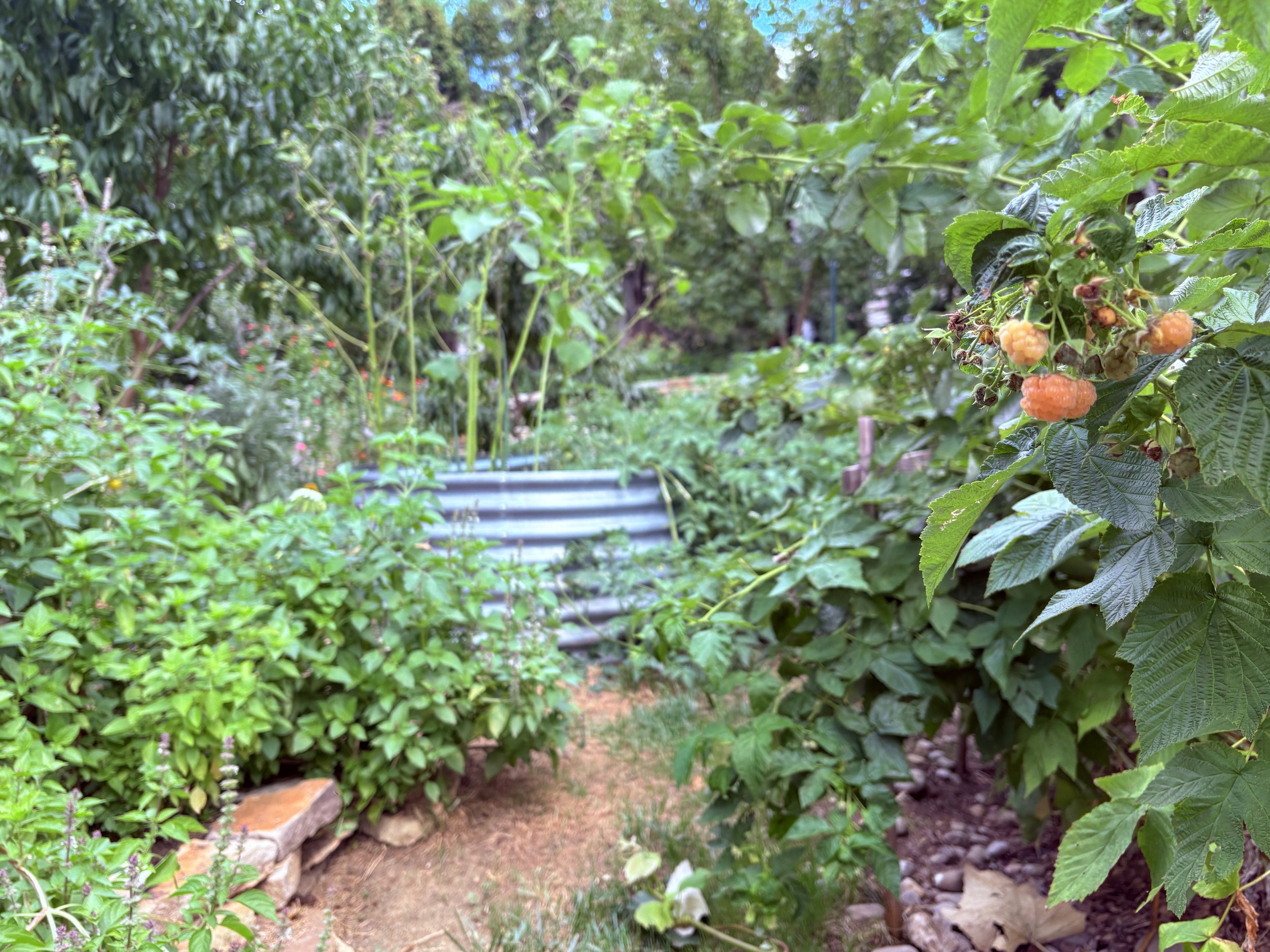
What happens if we simply let fruit trees grow to their full size under natural conditions? The goal we try for through pruning can be attained naturally by the tree without the intertwining, clustering, or dying back of branches.
Unfortunately, fruit growing today relies heavily on practices of pesticides, herbecides, chemical fertilization, and over pruning. So I've tried to describe the basic premises of a natural farming method such as Permaculture. We are founded upon a return to nature that observes and allows the young sapling to grow into a tree with a natural form. We don't need to over design what is already made perfect.
Instead of sprays and injections and constant weeding, in Permaculture and Natural Farming the living orchard soil is preserved and actively enriched. Trees can grow sturdy and healthy without chemical attempts at vigor. They can grow orderly and beautiful without pruning. These principles of less worry about weeding, no tilling, no chemical fertilization, and no pruning cannot be achieved independently; they are closely and inextricably tied to each other. Everything in a permaculture orchard or garden should seek symbiosis. These interconnected relationships are what prevent pests and disease, not man and his chemicals which leave it all lifeless.
Soil management techniques such as green manure cultivation through diverse cover cropping eliminates the necessity of weeding and tilling. This makes chemical and big disk fuel equipment-free cultivation entirely possible. It is the same case with pest and disease management. The best method of control is seemingly no control at all. If these regenerative methods are applied, and nature allowed harmony, crop damage by diseases and pests will decline and no longer be a worry.
We spray entire mountains and forests with herbicides and pesticides, but this is likely to have an undesired effect of inducing further disease and pest damage, thus necessitating even more complex spraying and fertilization operations later on. You see, we have forgotten the cycles of nature.
"Man is the sole heretic in the natural order"
~Masanobu Fukuoka
We can certainly farm organically, affordably, and in harmony with the earth and it's cycles. Vegetable crops can be rotated as well as interplanted with one another year after year with no fertilizers or pesticides if we follow the rules. This means practices like leguminous green manure plants, replenishment of organic matter with gramineous plants, deep conditioning and fighting compaction with root vegetables, and reduce disease and pests through guilds involving herbs, think of fumigation as well as attraction of predatory critters. Sometimes segregation of a crop is absolutely necessary for potatoes, gourds, and brassicas, however, we still companion plant, and we still rotate in the green manure and other crops that keep the soil in harmony through the seasons to regenerate.
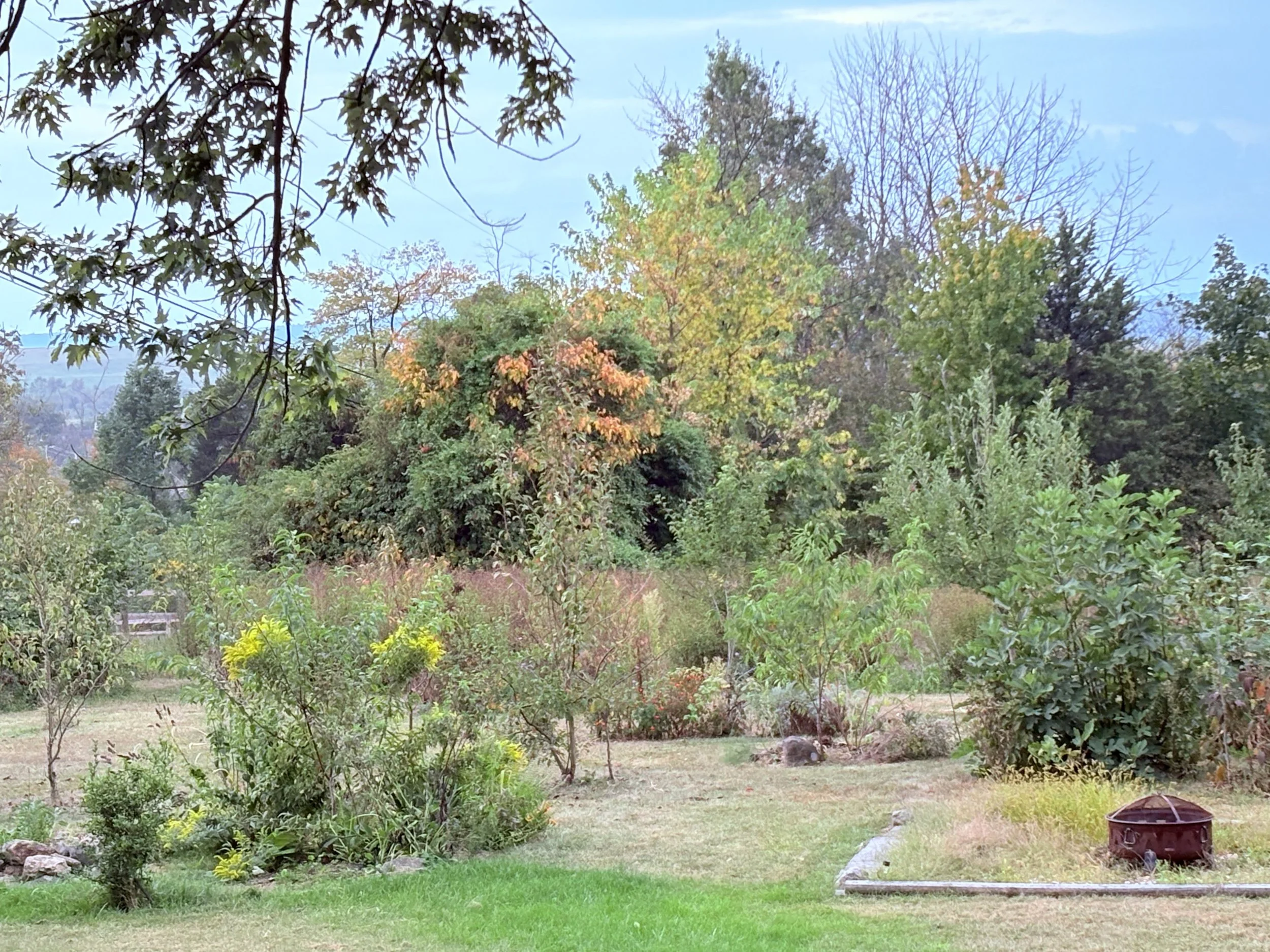
Creating the appropriate mounds, ridges, and trenches is vital to not plowing as well as natural irrigation. Planted green manure is a method do avoid adding fertilizer over and over. Involving animals friends via concepts like silvopasture or alley cropping helps as well.
No tilling and no weeding method go hand in hand. We directly seed the next seasons crop into the maturing and soon ready to harvest crops from the prior season, likely seeded just a few months before. I've ready for harvesting or simply time to terminate the first crop, we prefer to use simple hand tools like a scythe for chop and drop of the laves and stalks of the harvested plants. These are now used as straw and mulch to combat weeds from growing while the second seasons crop is still very young. They add to the organic matter and their roots remain in the soil for carbon chain breakdown by the life of the soil. A small tip for successful seed germination if having trouble is to coat them in a mix of clay and potash.
An effective and efficient crop rotation system allows for all kinds of coexistence. It enables the soil to enrich itself by providing a thriving environment for soil microbes. I'm not the first to observe that true control is achieved through all types of plants that inhibit the emergence of disease and pests, and when all types of insects and microbes are present. Life in nature is a continuous cycle between animals, plants, and microorganisms. Even the rotting and decomposing facet is vitality. Maybe death and decay is not the most pleasant bit, but we must accept that nature uses it all and does not discriminate.
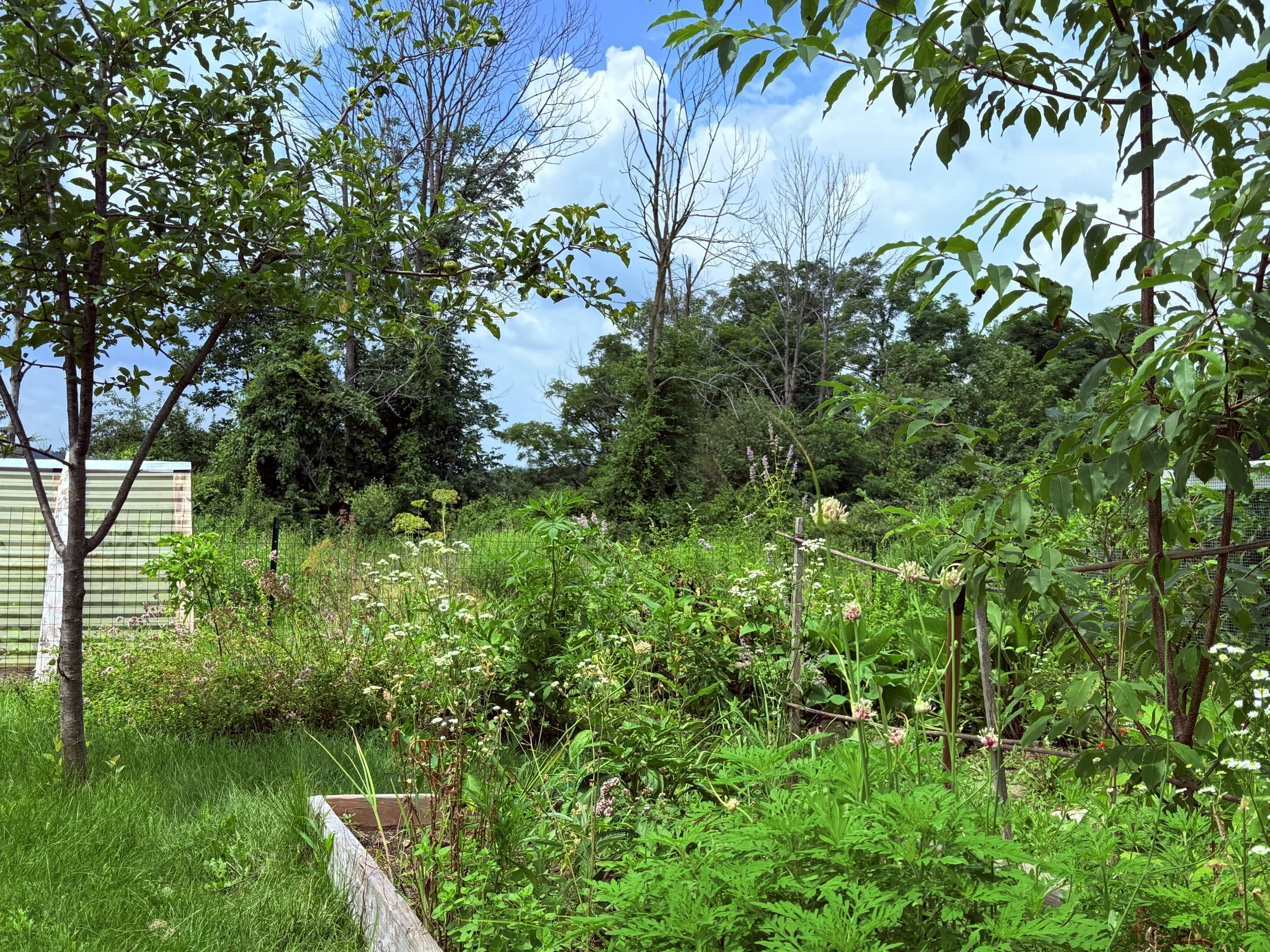
What I've described is what I believe to be the least wasteful, the most natural, and the most sensible way to feed one another. What does it take to grow a plant in a greenhouse without soil and without microbial life or waste product of animals? If we're being truthful, nothing is actually less scientific at the end of the day than artificial chemicals and artificial sunlight growing plants in plastic.
Plants grown naturally with diversity in regenerative soil have strong, healthy roots and they are resistant to disease and pests. Weeding, over fertilization, and pruning confuses the soil, the plants, and the tree. This reduces disease resistance. Probably not the desired effect. Today, by spraying their orchards with pesticides, fruit growers increase disease and pest damage; by over-pruning, they create strange, misshapen trees; and by applying chemical fertilizer, they promote nutrient deficiencies in the soil itself. This leads to nutritionally deficient humans.
Man will have to decide for himself, but the answers really do seem painfully obvious. The natural order of things is best. We just forgot our place in it. We forgot that we can thrive through harmony and personal responsibility. We almost feel like it is someone else's job for us to be able to survive. It was not but a hundred years ago where we understood better.
Modern advances might appear to have made life easier, but we all know this is a facade, a sales pitch and nothing more. The life inside of each man, woman, and child is stunted while screens and technological marvels steal our natural joy. We are several steps removed from true humanity, and this is why the individual struggles, having lost their identity. Progress has meant removal from the earth. The seriously good news is that how fast we have let go is also how fast we can return.
Peace, Love, and Permaculture,
Tyler Heitzman - Ancient Origins Permaculture